

Buying Equestrian Property in the Santa Ynez Valley: What to Expect in 2026
Equestrian properties in the Santa Ynez Valley are among the most sought-after lifestyle properties in California, and the 2026 market rewards buyers who know what to look for before they make an offer.
What Makes the Santa Ynez Valley Equestrian Market Different in 2026?
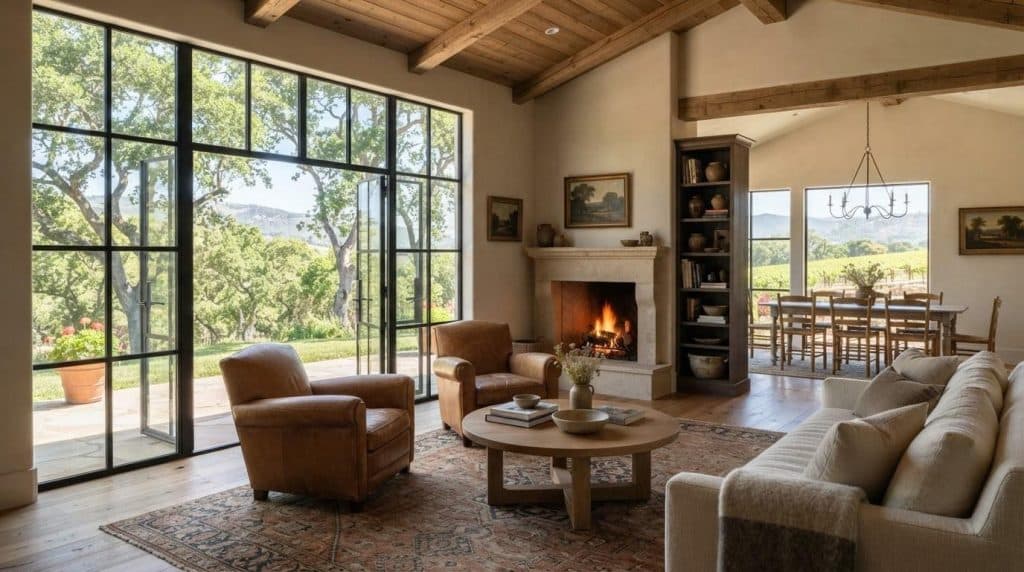
The Santa Ynez Valley is one of the few places in California where horse property, wine country land, and a Mediterranean climate all exist on the same parcel. Buying equestrian property in the Santa Ynez Valley in 2026 means competing for a genuinely limited supply of lifestyle properties that rarely come back to market once a family settles in.

As of 2026, the Santa Ynez Valley holds fewer than 60 active equestrian listings at any given time across ZIP codes 93460 and 93463. That tight inventory keeps well-priced horse farms for sale moving in 30 to 45 days on market (DOM), which is the number of calendar days from listing to accepted offer. Overpriced parcels sit longer, sometimes 90 to 120 days, which gives informed buyers a negotiating window.
As of 2026, the Santa Ynez Valley holds fewer than 60 active equestrian listings at any given time, keeping well-priced horse farms moving in 30 to 45 days on market.
The local climate is a major reason demand stays strong. NOAA classifies the Santa Ynez Valley in the Mediterranean Köppen climate zone, with mild winters, long dry summers, and the marine layer that rolls in from the Pacific most mornings. That climate keeps pastures productive for more months per year than most California inland valleys, which directly affects how much a horse property is worth to a working equestrian operation.
Prices for equestrian estates in the Santa Ynez Valley generally range from roughly $1.5 million for a smaller 5-acre parcel with a basic barn to well above $5 million for a full equestrian estate with a covered arena, multiple paddocks, and a main residence. The factors that move price the most are total acreage, water source (well versus municipal), barn size and condition, arena footing, and proximity to riding trails.
What Should You Evaluate When Buying Equestrian Property in Santa Ynez, CA?
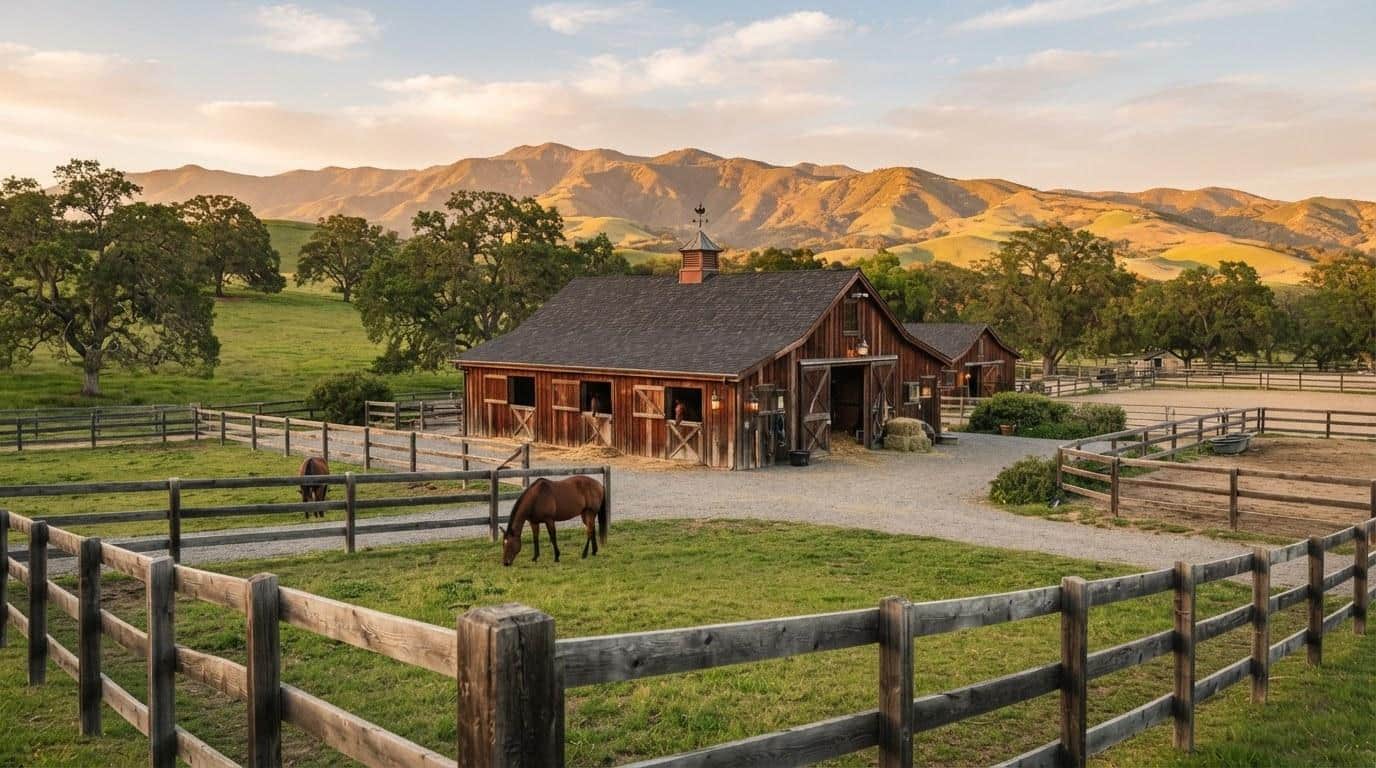
Evaluating a horse property in Santa Ynez, CA requires looking at infrastructure that a standard home inspection will not cover. Water supply, soil drainage, zoning, and barn condition each carry risks that can cost tens of thousands of dollars to fix after closing.
We see buyers underestimate water costs more than any other single factor. Across our transactions in Santa Ynez, CA, properties relying on a private well average roughly 3 to 5 acre-feet of water per year for a 10-horse operation, and well yields in the valley vary significantly by parcel. Always order a well flow test and water quality report before removing a contingency (a contingency is a condition written into the purchase contract that must be met before the sale closes).
Here are the key infrastructure items to evaluate on any equestrian property for sale in the Santa Ynez Valley:
- Water source and yield: Confirm whether the property uses a private well, a shared agricultural water district, or municipal supply. Test flow rate and check for nitrates and coliform bacteria.
- Zoning and use permits: Santa Barbara County Agricultural zoning (AG) allows horses as a matter of right on most parcels, but commercial boarding or training operations may require a conditional use permit. Verify with the county before you close.
- Barn and stable condition: Look for wood rot at the base of stall walls, roof condition, electrical panel age, and whether the ventilation meets the minimum standards recommended by the American Veterinary Medical Association for equine housing.
- Pasture and soil drainage: Santa Ana wind events in fall dry out pastures quickly. Check for hardpan soil layers that prevent drainage and create mud hazards in wet winters.
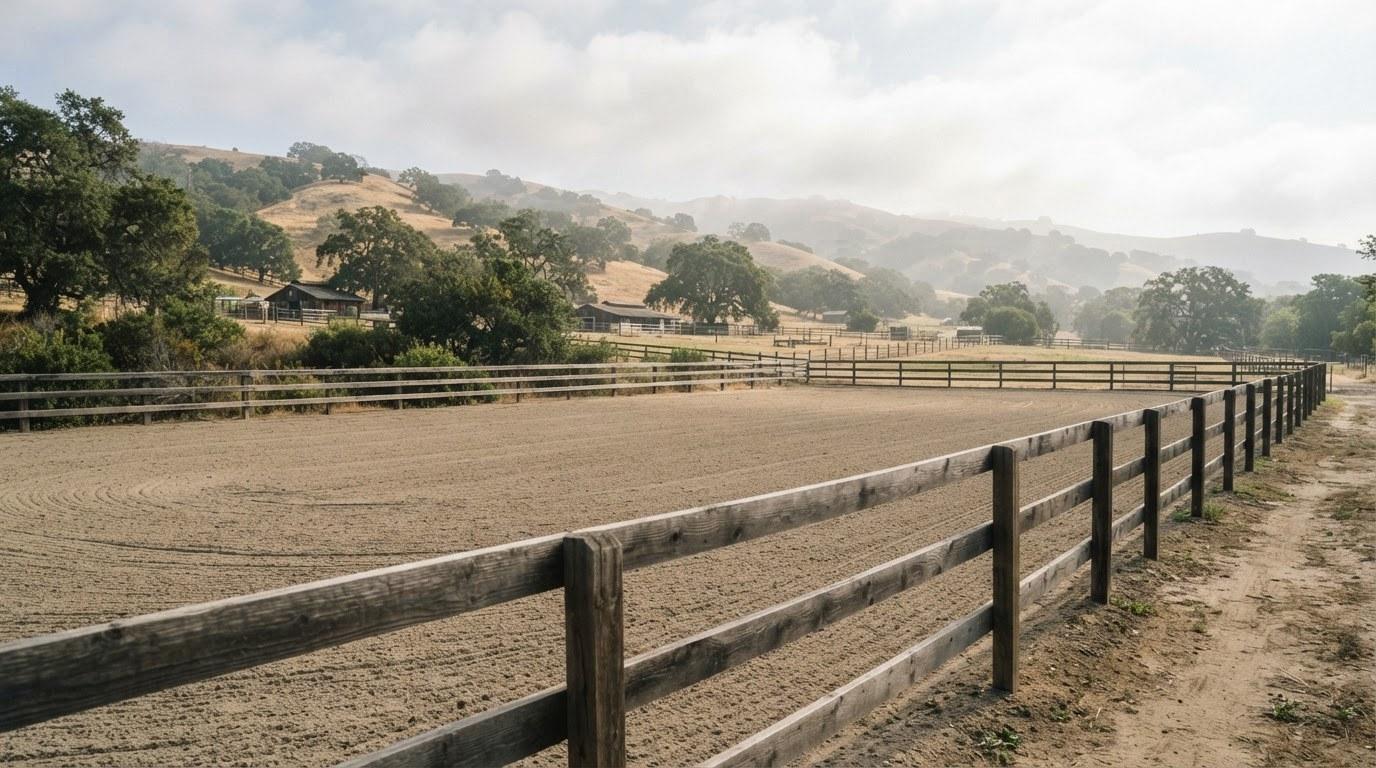
- Arena footing: Decomposed granite, rubber, or sand footing each has a different replacement cost. Poor footing is a lameness risk and a price negotiation point.
- Fencing type and condition: Wood post-and-rail, pipe, or vinyl each carries different maintenance costs. Walk every fence line before making an offer.
- Fire risk and defensible space: The valley’s dry summers and Santa Ana wind conditions put many horse properties in a high or very high fire hazard severity zone. Confirm the property’s CAL FIRE designation and the cost of required defensible space clearance.
How Does the Buying Process Actually Work for Horse Properties in Santa Ynez?
Buying a horse property in Santa Ynez follows the same basic escrow process as any California residential sale, but with additional inspections, longer due-diligence timelines, and more complex disclosures. Plan for a 45- to 60-day escrow period rather than the 30 days common in standard residential transactions.
Here is the step-by-step sequence most equestrian property buyers in Santa Ynez, CA move through:
- Get pre-approved for financing. Lenders treat rural properties differently. If the parcel is over 10 acres or includes significant agricultural improvements, some conventional loan programs will not apply. Talk to a lender familiar with jumbo rural loans before you start touring horse farms for sale.
- Define your operational needs. Know how many horses you plan to keep, whether you need a covered arena, and whether you plan to board or train commercially. This narrows the search to properties that actually fit your use case.
- Make an offer with targeted contingencies. A strong offer on equestrian real estate in the Santa Ynez Valley typically includes a physical inspection contingency, a well and septic inspection contingency, and a financing contingency. Waiving contingencies to compete can expose you to serious financial risk on a property with hidden infrastructure problems.
- Order specialized inspections during escrow. Hire a licensed general inspector for the residence, a separate equestrian facility inspector for the barn and arena, a well contractor for flow and water quality, and a septic inspector. Budget 10 to 14 days minimum for all reports to come back.
- Review all California seller disclosures. California law requires sellers to complete a Transfer Disclosure Statement (TDS) covering known material defects. For rural and agricultural properties, additional disclosures about water, zoning, and Williamson Act contracts (property tax agreements that restrict non-agricultural use) may apply. Consult a real estate attorney if any disclosure raises questions.
- Negotiate repair credits or price reductions based on inspection findings. Infrastructure repairs on horse properties often run $20,000 to $80,000 or more for items like barn roof replacement, arena regrading, or well pump replacement. Use inspection reports to negotiate rather than accepting a property as-is without data.
- Close escrow and transfer utilities and water accounts. Agricultural water district memberships and shared well agreements must be formally transferred at closing. Confirm this with your escrow officer before signing final documents.
| Property Type | Typical Acreage | Key Infrastructure | Typical Price Range (2026 Market) | Best Fit For |
|---|---|---|---|---|
| Starter Horse Property | 3 to 7 acres | 2 to 4 stalls, basic barn, pasture | $1.5M to $2.5M | Hobby riders, 2 to 4 horses |
| Mid-Size Equestrian Estate | 8 to 20 acres | 6 to 12 stalls, tack room, arena, paddocks | $2.5M to $4.5M | Serious competitors, small training programs |
| Full Equestrian Ranch | 20 to 100+ acres | Covered arena, 12+ stalls, multiple pastures, guest quarters | $4.5M and above | Professional trainers, boarding operations, breeding programs |
What Mistakes Do Buyers of Equestrian Real Estate in Santa Ynez Valley Make?
The most expensive mistakes in equestrian real estate in the Santa Ynez Valley come from applying a standard residential mindset to a specialized agricultural asset. Buyers who skip equestrian-specific due diligence routinely discover repair bills that dwarf their negotiating savings.
- Skipping the well flow test: A well that produces 3 gallons per minute may support a household but will not support 8 or more horses through a dry Santa Ynez summer. A flow test costs a few hundred dollars and can save you from buying a property that cannot support your intended use.
- Assuming zoning allows all equestrian uses: Santa Barbara County distinguishes between keeping horses for personal use and operating a commercial boarding or training facility. Buyers planning a business operation must verify permitted uses before closing, not after.
- Using a residential-only inspector: A standard home inspector is not trained to evaluate stall drainage, arena footing compaction, hay storage fire risk, or manure management systems. Hire an inspector with documented equestrian facility experience.
- Ignoring the Williamson Act status: Some horse farms for sale in the Santa Ynez Valley are enrolled in the Williamson Act, which lowers property taxes in exchange for a 10-year rolling commitment to agricultural use. This affects what you can build and how quickly you can exit the contract. Check the county assessor’s records before you make an offer.
- Underestimating fire insurance costs: Many equestrian properties in the valley fall in Cal Fire high-hazard zones. As of 2024, several major insurers have reduced their California rural property coverage, which means buyers should confirm insurability and get insurance quotes before removing contingencies, not after.
- Letting emotion drive the timeline: Horse properties in Santa Ynez, CA sell fast when priced right. Rushing to waive inspections to win a bidding situation is a common and costly error. A well-connected local agent can sometimes negotiate a short inspection period without eliminating the contingency entirely.
When Should You Involve a Professional Agent for Equestrian Property Sales in Santa Ynez?
You should involve a professional agent who specializes in equestrian property sales in Santa Ynez before you start touring homes, not after you find one you like. The Santa Ynez Valley equestrian market is small enough that many of the best horse properties for sale trade before they ever appear on a public listing platform.
A buyer’s agent who is active in lifestyle properties in the Santa Ynez Valley will know which ranches are likely to come to market in the next 90 days, which sellers have already had conversations about listing, and which properties have infrastructure issues that are not disclosed in a listing description. That network is worth more than any search filter.
Across our transactions in the Santa Ynez Valley, off-market equestrian estates account for roughly 1 in 4 closed sales, meaning buyers who rely only on public listings miss a meaningful share of available inventory.
Across our transactions in the Santa Ynez Valley, off-market equestrian estates account for roughly 1 in 4 closed sales, meaning buyers who rely only on public listings miss a meaningful share of available inventory.
A professional agent also helps you structure offers correctly for this market. Comps (comparable sales, meaning recently sold properties used to estimate fair market value) for equestrian estates are harder to pull than for standard residential homes because no two horse properties have the same combination of stalls, acreage, water rights, and improvements. An agent who has closed equestrian real estate in the Santa Ynez Valley can identify the right comps and help you avoid paying significantly above market for a property with deferred maintenance.
California requires real estate agents to hold a valid license issued by the California Department of Real Estate. When evaluating an agent, confirm their license is active and ask specifically how many equestrian or rural properties they have represented in the Santa Ynez Valley in the past 24 months. That number matters more than total transaction volume.
Get Expert Guidance on Equestrian Property in Santa Ynez, CA
Buying equestrian property in the Santa Ynez Valley in 2026 is a significant investment that requires local knowledge, specialized due diligence, and an agent who understands both the residential and agricultural sides of the transaction. Contact Timm Delaney for buyer consultation, seller representation, and contract negotiation on horse properties and equestrian estates throughout the Santa Ynez Valley.
Call (805) 895-1109 to schedule a consultation focused specifically on your equestrian property goals. Timm Delaney works with buyers and sellers across Santa Ynez, CA and the surrounding valley communities.
Frequently Asked Questions
How much does equestrian property in the Santa Ynez Valley cost in 2026?
Horse properties in the Santa Ynez Valley generally range from about $1.5 million for a smaller parcel with a basic barn to well above $5 million for a full equestrian estate with a covered arena and multiple paddocks. The biggest price drivers are total acreage, water source, barn size and condition, and proximity to riding trails. For an accurate valuation on a specific property, contact Timm Delaney at (805) 895-1109.
How long does it take to buy a horse property in Santa Ynez, CA?
Plan for a 45- to 60-day escrow period on most equestrian properties in Santa Ynez, CA. That timeline accounts for specialized barn inspections, well flow tests, septic evaluations, and the review of agricultural disclosures like Williamson Act status. Well-priced horse properties in the valley typically go under contract within 30 to 45 days of listing, so buyers should be pre-approved before they start touring.
Do I need a special inspection when buying a horse property in the Santa Ynez Valley?
Yes, a standard home inspection is not enough for an equestrian property. You should hire a separate inspector with equestrian facility experience to evaluate the barn, arena footing, stall drainage, and fencing. You should also order a well flow test and water quality report if the property uses a private well, which is common in the Santa Ynez Valley.
Can I run a boarding or training business on equestrian property in Santa Ynez?
It depends on the zoning and any existing use permits. Santa Barbara County Agricultural zoning generally allows keeping horses for personal use, but commercial boarding or training operations may require a conditional use permit from the county. Always verify permitted uses with Santa Barbara County Planning and Development before you close escrow.
Why should I use a local agent for buying equestrian real estate in the Santa Ynez Valley?
A local agent who specializes in equestrian real estate in the Santa Ynez Valley has access to off-market listings and can identify the right comparable sales for a property type that is hard to value using standard residential data. Roughly 1 in 4 equestrian estate sales in the valley happen off-market, meaning buyers who rely only on public listings miss a significant share of available inventory. Timm Delaney provides buyer consultation and contract negotiation specifically for horse properties and lifestyle properties in Santa Ynez, CA. Call (805) 895-1109 to get started.